Acrylic Rendering Sydney
Jim’s Rendering Sydney (Sydney-wide • 15+ years experience • Quote on site)
If you want a clean, modern finish that holds up to Sydney sun, rain, and day-to-day wear, acrylic rendering is a strong option. We apply acrylic render systems to improve street appeal, help protect exterior walls, and reduce the likelihood of ongoing cracking compared to more rigid finishes. For a fixed on-site quote and clear scope, start here: Get a fixed on-site quote.
Not for you if… you only want a quick patch over loose/flaking surfaces, or you need a “one-size-fits-all” price without a site check first.
Get A Free Quote

Reviews



What your acrylic render job covers
Acrylic Rendering Services should feel straightforward: you want the wall to look better, perform better, and not become a maintenance headache six months later. Your project typically includes:
Acrylic render is often chosen for its versatility across surfaces like fibre cement, painted walls, and masonry—provided the preparation is right. If you’re unsure whether your walls are suitable, this guide is a good starting point: best surfaces for acrylic render.
Finish options (plain English):
We’ll talk through what suits your façade, sun exposure, and the overall look you’re chasing—without overcomplicating it.
After-hours / flexible scheduling: If access is tricky (busy sites, tenants, or commercial frontages), we can often work around your timing where practical.

When acrylic rendering makes sense
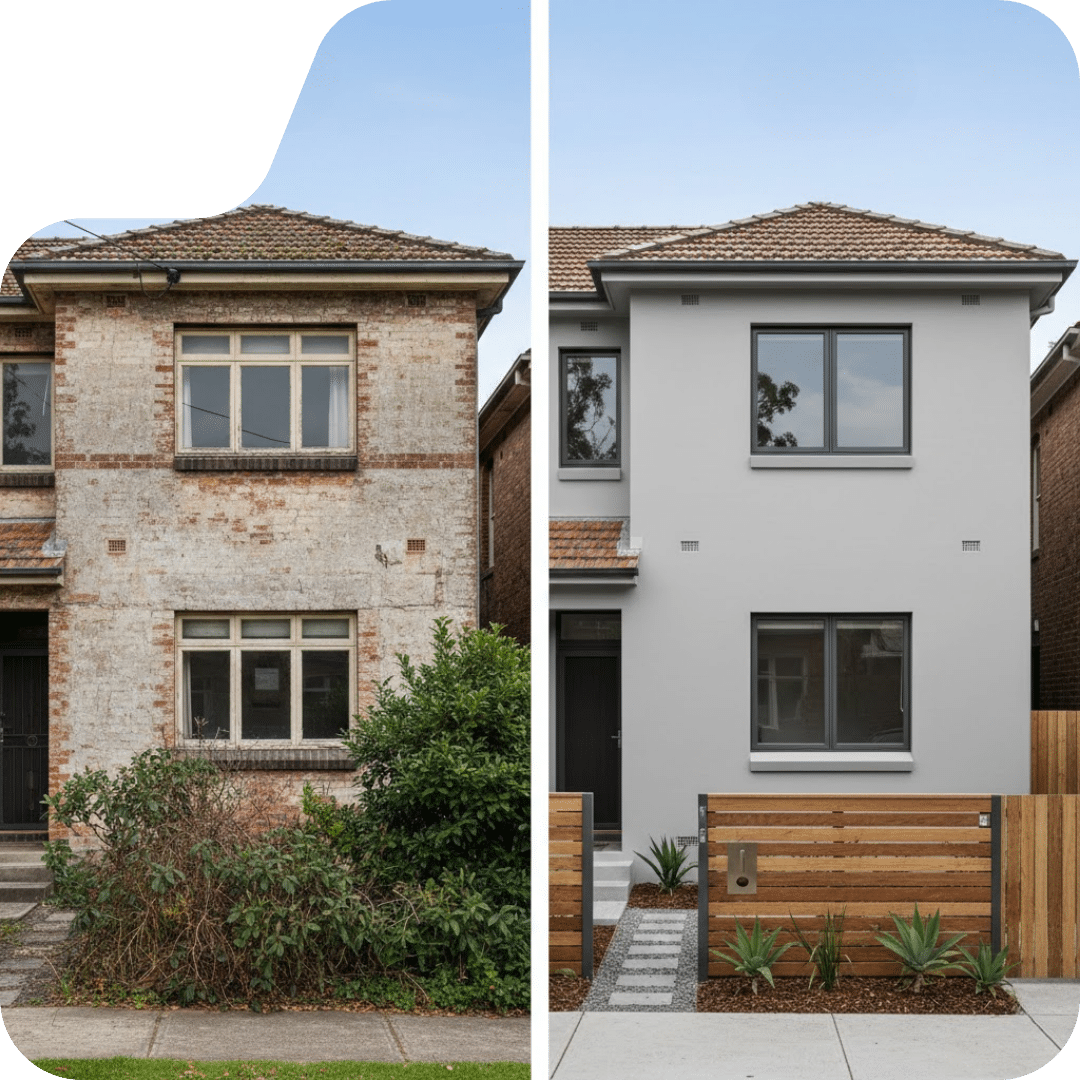
Acrylic rendering is usually a good fit if you’re:
It may not be the right option if:
If you’re seeing cracks that are widening, recurring, or telegraphing through older coatings, it’s worth addressing the root cause before finishing.
How acrylic rendering upgrades your exterior
Most people call about acrylic rendering because they want a visible improvement (appearance), but they also want performance benefits (durability).
Here’s what acrylic rendering can improve on a typical Sydney property:
If you’re weighing up material choice, this comparison is a helpful read: acrylic vs cement render.
A quick note on “waterproof”
Acrylic render is often described as water-resistant, but exterior wall performance depends on the whole system: substrate condition, detailing, drainage, joints, and exposure. We’ll be upfront if your wall needs other fixes before a new finish is worth doing.
How the work is carried out
1. Quick call + photo check (optional)
If you can share a couple of photos and the suburb, we’ll confirm whether a site visit is the next step and what to look out for.
2. Site inspection and wall assessment
We check substrate type, existing coatings, cracking, damp risk areas, edges, corners, and access. If repairs are needed first, we’ll scope them clearly—especially where cracks need proper treatment rather than being “rendered over.” If you’re mainly dealing with cracking, you may be better served by wall crack repairs.
3. Preparation (the make-or-break step)
This can include cleaning, removing loose material, patching, priming/bonding, and ensuring the surface is ready to accept the render. Prep requirements vary by substrate; the practical breakdown is here: best surfaces for acrylic render.
4. Application of acrylic render coats
Depending on the finish, render may be trowelled, rolled, or sprayed, typically in multiple coats.
5. Detailing, curing, and tidy handover
Edges, junctions, corners, and touch points get finished cleanly. We’ll also talk you through curing and aftercare so the finish stays looking good.
Where we work and availability
We work Sydney-wide and book jobs based on access, weather, and scope.
If you want quick confirmation, the fastest path is to send your suburb + a couple of photos via the form: Get a fixed on-site quote.
Examples of areas we regularly cover include Epping, Parramatta, and Penrith (and everywhere in between).
What to look for in a renderer
Acrylic rendering looks simple from the street, but the outcome is heavily influenced by prep, detailing, and product suitability.
When you’re comparing providers, check:
If you’re still unsure whether acrylic is the best fit, it’s worth comparing with cement rendering and discussing where each performs best for your wall type and exposure.
Helpful resources
Related services (if your project needs more than a straight render):
If you’re deciding between finishes, we can also talk through texture coating options or full façade refresh via house rendering.
Common questions from Sydney homeowners
With good preparation, suitable products, and normal maintenance, acrylic render is often discussed in terms of decades of service life. Your exact lifespan depends on exposure (coastal salt, full sun), substrate condition, and detailing around edges and joints.
It depends on the wall, the finish you want, and how the property moves over time. Acrylic systems are commonly chosen for flexibility and broader substrate compatibility, while cement render can be a good choice for certain masonry situations. The best option is the one that matches your substrate and exposure.
Sometimes, yes—but only if the paint layer is stable and the surface is prepared correctly (cleaning, bonding/priming, and addressing flaking/poor adhesion). Rendering over failing paint is a shortcut that usually shows up later. A site check is the safest way to confirm suitability.
Many acrylic render jobs involve multiple coats to build a consistent finish and meet the chosen texture. The number of coats and application method (trowel/roll/spray) will vary based on substrate and finish requirements.
Pricing is usually influenced by total wall area (m²), access/scaffolding, wall condition (repairs and prep), and the finish level you choose (smooth vs textured vs coloured). That’s why an on-site quote is the most accurate way to price it.
Coloured acrylic render can reduce repainting steps and help keep the finish consistent, but it’s still important to choose suitable products for your exposure (full sun vs shaded elevations). We’ll talk through colour and finish options based on your façade and maintenance expectations.
Acrylic rendering is commonly planned around dry windows and manageable humidity, because curing conditions affect finish consistency. We’ll schedule around forecast conditions to reduce risk of uneven drying or defects.
It can reduce the chance of small surface cracks telegraphing through because it’s more flexible than rigid finishes, but it won’t “solve” structural movement or moisture issues on its own. If cracking is active, you may need repairs and correct joint/detailing first.
Often, rendering is treated as maintenance or a cosmetic upgrade, but approvals can vary depending on what else is changing (heritage, major façade alterations, structural changes). If you’re unsure, we’ll point you toward the right questions to ask before you start.
Basic care usually means gentle washing when needed, keeping drainage and overflow points clear, and addressing chips or damage early. Maintenance needs vary by finish type and exposure, so we’ll give you practical aftercare guidance at handover.
What working with us looks like
Sydney homeowners typically want three things: a finish that looks tidy, a job that’s planned properly, and a result that doesn’t become a recurring fix. We focus on: